
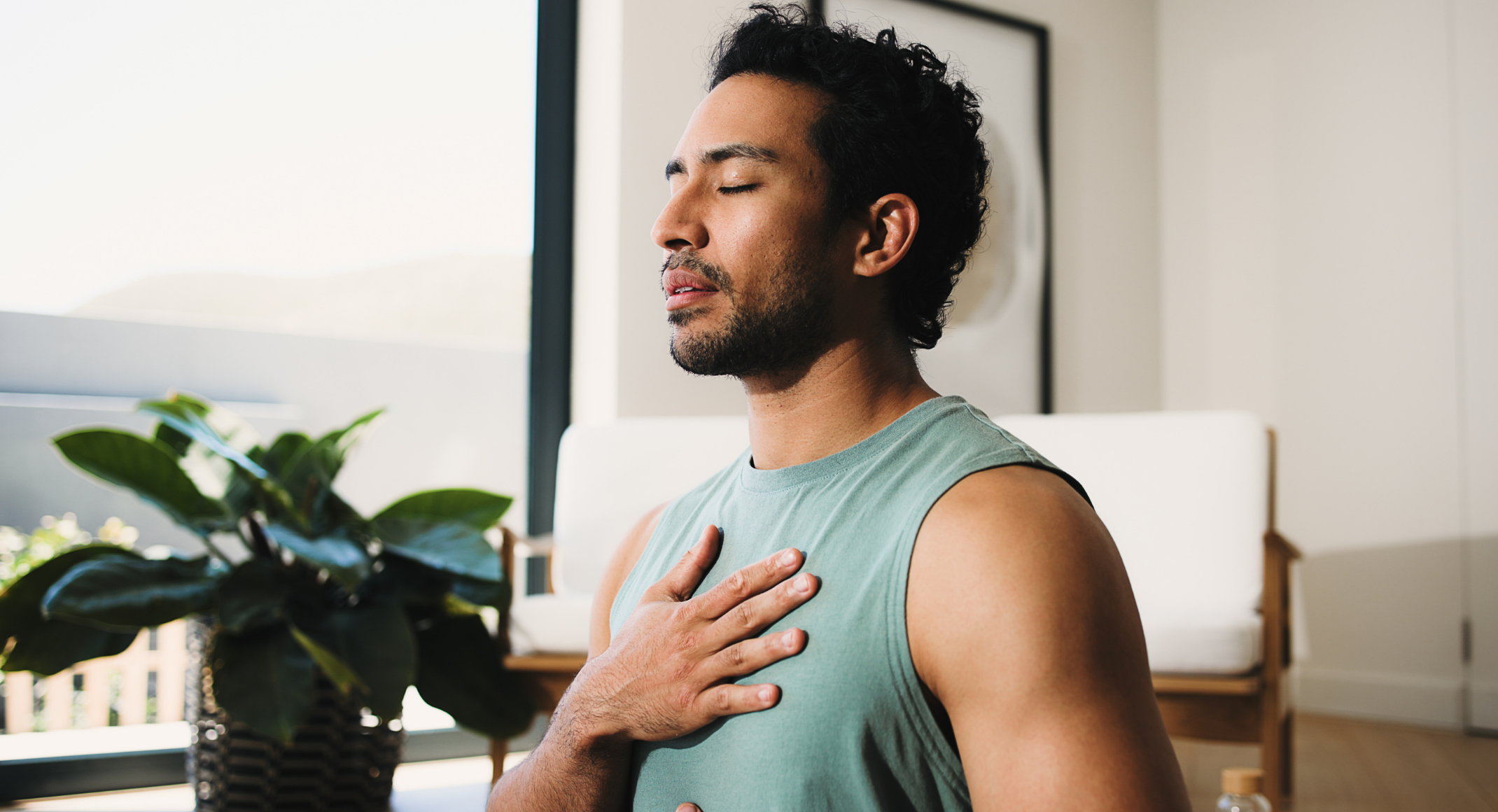
“Relaxation” is one of the most common words used to describe Reiki.
It is also one of the least interesting ways to think about what may be happening during a session.
Relaxation is not simply a pleasant feeling.
The transition from a state of physiological stress toward a state of relative safety involves coordinated changes throughout the body. Heart rate, breathing, attention, muscle tension, autonomic activity, and numerous other physiological processes can shift as the body responds to changing conditions.
So when someone says, “I felt deeply relaxed during Reiki,” an important scientific question follows:
What does relaxation actually mean physiologically?
And perhaps even more importantly:
Could Reiki influence some of the biological processes associated with stress and recovery?
We do not yet have a definitive answer.
But the question is worth exploring.
The Body’s Stress Response Is Designed to Protect Us
Stress is not inherently harmful.
The stress response exists because the body needs to respond rapidly to challenges.
When the brain perceives threat, uncertainty, or demand, a coordinated physiological response can increase alertness and prepare the body for action.
The sympathetic nervous system becomes involved.
Hormonal systems, including the hypothalamic pituitary adrenal axis, participate in the response.
Heart rate and blood pressure may change.
Attention becomes oriented toward potential threats.
Energy is mobilized.
These responses are adaptive when they are appropriately activated and then allowed to resolve.
The problem is not that the body can enter a stress response.
The problem can arise when activation becomes persistent, excessive, or poorly matched to the situation.
Stress and Recovery Are Not Opposites
It is tempting to think about the nervous system as having an “on” switch and an “off” switch.
Human physiology is more complicated.
The autonomic nervous system continuously adjusts bodily functions according to context.
The goal is not to remain permanently calm.
The goal is adaptability.
A healthy nervous system needs to respond when action is required and recover when the demand has passed.
This is one reason researchers are interested in measures such as heart rate variability, which can provide information about variation in the timing between heartbeats and can be influenced by autonomic regulation.
HRV is not a simple “stress score,” however, and it should not be treated as a standalone measure of health or nervous system regulation.
What Happens When the Body Experiences Safety?
A person does not need to consciously think, “I am safe” for physiological regulation to occur.
Context matters.
Environment matters.
Breathing matters.
Social interaction matters.
Attention matters.
Physical comfort matters.
The brain continuously integrates information about internal and external conditions.
This is one reason practices involving quiet, focused attention and reduced environmental stimulation can feel profoundly different from ordinary daily activity.
A Reiki session often creates precisely this type of environment.
The person may be lying quietly.
The practitioner is intentionally attentive.
There may be little conversation.
The environment may be predictable.
The person is invited to slow down.
These factors themselves deserve consideration when studying Reiki.
Where Does Reiki Enter the Picture?
This is where scientific humility becomes particularly important.
It would be tempting to say that Reiki activates the parasympathetic nervous system, stimulates the vagus nerve, lowers cortisol, reduces inflammation, or “resets” the nervous system.
Some Reiki websites make exactly these kinds of claims.
The evidence does not currently justify treating all of those mechanisms as established facts.
Research into Reiki and biofield therapies has examined physiological measures including heart rate variability and EEG, but findings have not produced a consistent biological signature unique to Reiki. One systematic review found that the available studies were generally moderate to poor in quality and that physiological findings were inconsistent.
That does not close the question.
It tells us the question remains open.
The Importance of the Experience Itself
There is another layer that is sometimes overlooked.
A person’s experience of stress is not exclusively determined by measurable biomarkers.
Subjective experience matters.
Someone may report feeling calmer.
They may notice less muscular tension.
They may sleep differently after a session.
They may become more aware of bodily sensations.
They may experience emotional release.
These experiences are meaningful outcomes even when we do not yet understand every biological pathway involved.
The challenge is to measure them appropriately without turning subjective experiences into claims they cannot support.
Could Reiki Affect Autonomic Regulation?
This is an active area of interest rather than a settled conclusion.
Researchers have investigated whether Reiki and related biofield practices influence physiological measures associated with autonomic activity.
Some studies have reported changes.
Others have not.
A major challenge is that studies differ substantially in their protocols, populations, treatment duration, comparison groups, and outcome measures. A recent evidence map of biofield therapy research found substantial variation across hundreds of studies and identified inconsistent reporting as one factor limiting conclusions.
This means we should resist the urge to turn an interesting finding into a universal claim.
Instead, we can ask a more useful question:
Does Reiki create conditions under which some people experience meaningful shifts in physiological or psychological stress?
That question is both testable and clinically relevant.
Stress Is More Than Cortisol
Cortisol has become almost synonymous with stress in popular wellness culture.
But stress physiology is not one hormone.
The body’s response to stress involves multiple interacting systems.
The autonomic nervous system.
The endocrine system.
Immune signaling.
Metabolism.
Sleep.
Attention.
Emotion.
Behavior.
Social connection.
Recovery.
This complexity is important because it prevents us from reducing Reiki to a single biological pathway.
If Reiki is helpful for some people, the eventual explanation may involve multiple interacting mechanisms rather than one “Reiki switch.”
The Role of Attention
One particularly interesting area for future research is attention.
During a Reiki session, people may become more aware of internal sensations.
They may notice breathing.
Temperature.
Muscle tension.
Heart sensations.
Emotions.
Thoughts.
Subtle changes in bodily perception.
This brings Reiki research into conversation with the growing scientific interest in interoception, the ability to sense, interpret, integrate, and regulate signals arising from within the body.
Interoception may be relevant to emotional regulation, psychological flexibility, and the experience of stress.
That does not mean Reiki has been proven to improve interoception.
It means this may be a useful avenue for future investigation.
What If Relaxation Is the Beginning Rather Than the End?
Perhaps one of the most useful ways to think about Reiki is that relaxation may create an opportunity for something else to happen.
When external demands decrease, people may notice internal experiences that were previously drowned out by activity.
When attention slows, bodily sensations may become more apparent.
When the environment feels supportive, emotional material may become easier to recognize.
When the body is no longer preparing for immediate action, recovery processes may have more opportunity to occur.
None of this requires us to claim that Reiki cures disease.
It simply recognizes that the human organism is responsive to context.
What We Can Say With Confidence
We know that stress affects multiple physiological systems.
We know that the autonomic nervous system participates in the body’s response to changing conditions.
We know that relaxation and recovery are important components of physiological regulation.
We know that people receiving Reiki frequently describe experiences of calm and relaxation.
We know that Reiki and other biofield therapies have been studied using physiological and psychological outcomes.
We also know that the evidence remains inconsistent and that the specific biological mechanisms of Reiki have not been established.
That distinction is essential.
A More Interesting Question
Perhaps the future of Reiki research should move beyond asking:
Does Reiki relax people?
A better series of questions might be:
Does Reiki reliably change measures of stress or autonomic function?
Are those changes clinically meaningful?
Do some people respond more strongly than others?
Does the experience differ according to the person’s baseline stress state?
Does repeated Reiki produce different outcomes from a single session?
How do subjective experiences relate to physiological measures?
And what mechanisms could plausibly account for the findings?
These questions move us beyond the language of “energy versus science.”
They put Reiki where it belongs:
inside an ongoing scientific conversation about the relationship between human experience, physiology, environment, and health.
At Evergreen Reiki, that is the conversation we want to keep having.
